
How to Measure Trailer Axles for Accurate Replacement
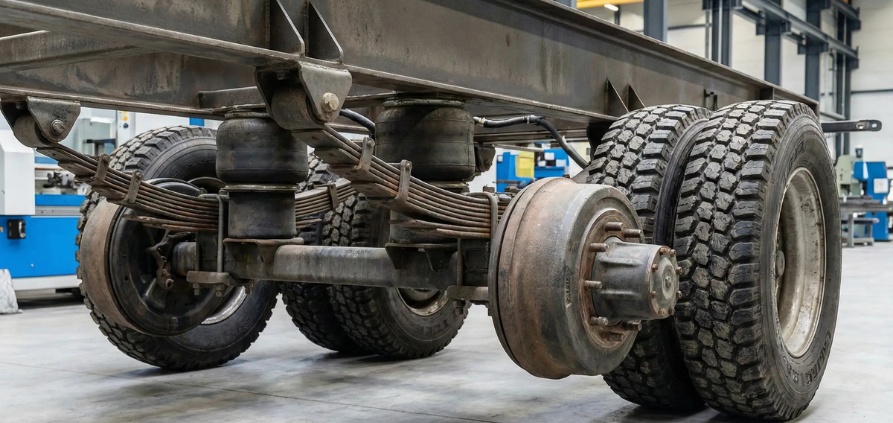
What is a Trailer Axle?
The trailer axle is the central shaft that connects the wheels of your vehicle. It can aid in the wheel rotation and can maintain even weight distribution. The axle assembly can support the:
- Hubs
- Brakes
- Suspension part
Why Proper Trailer Axle Measurement Is Essential?
The trailer hub is a crucial component of your vehicle, and it is essential to maintain and replace it as needed to ensure optimal performance. Here’s how to calculate the axle length of your trailer for replacement.
Select and Avail Essential Tools
Before starting the task, ensure that you have the necessary tools ready. Choose the best tools, as the axle measurement should be precise. The instruments required include:
- Tape to measure
- Straight edge for accurate alignment
- Note pad to record measurements
- Callipers to measure axle beam diameter
- Measure the Hub Face Distance
The hub distance is an essential dimension to measure while calculating the exact axle length. It represents the distance between the outer faces of the two hubs, where the back of each wheel meets the hub surface.
To calculate the dimension:
- Place the tape on the outer face of a hub
- Extend it to the outer face of the opposite hub
- Please record the measurements in both inches and millimetres.
Calculating the Spring Centre Distance
The spring centre distance is the distance between the centre points of both spring seats. These seats are directly integrated with the vehicle’s suspension system.
Here’s how you can measure it.
- Identify the centre point of one spring pad.
- Calculate the distance between the opposite spring pads’ centre.
- Record your result carefully.
Identify the Axle Weight Capacity
Learning your axle’s load-carrying capacity can help you choose the appropriate trailer axle. Most axles include a label showing the weight rating, usually located on the axle tube. You can estimate the capacity by measuring the axle beam diameter if the label is missing or unreadable.
Typical capacities with respect to the axle beam diameter include:
- 44.5 mm (1.75″) — Approx. 900 kg (2,000 lb) capacity
- 60.3 mm (2.375″) — Approx. 1,600 kg (3,500 lb) capacity
- 76.2 mm (3″) — Approx. 2,600–3,200 kg (5,200–7,000 lb) capacity
- 127 mm (5″) — Approx. 4,000–4,500 kg (9,000–10,000 lb) capacity
Determine the Bolt Pattern
The bolt pattern represents how your wheels are mounted to the hub. Make sure to choose a trailer axle that matches the number of lugs and PCD of the current bolt.
Here are the most common configurations:
- 2,000 lb axles: 4 or 5-lug patterns
- 3,500 lb axles: 5-lug on 114.3 mm (4.5″) PCD
- 5,200 lb axles: 6-lug on 139.7 mm (5.5″) PCD
- 7,000 lb axles: 8-lug on 165.1 mm (6.5″) PCD
Alternative Assessment Methods
In some cases, you may be unable to measure the trailer axle length directly. For example, when the axle is bent or hubs are missing, you may be unable to use the usual method for determining the length. In such a scenario, you can use one of the following methods.
1. Spring Centre + Overhang Method
If you have one hub or a bent axle, measure the spring centre and the overhang (distance from the spring centre to the end of the axle). Then use the formula:
Spring Centre + (Overhang × 2) = Hub Face Distance
2. Flange-to-Flange Method
If both hubs are missing, measure between the outer faces of the brake flanges and add:
- +178 mm (7″) for 2,000 lb axles
- +152 mm (6″) for 3,500 lb axles
- +229 mm (9″) for 6,000–7,000 lb axles
3. Overall Length Method
When neither hubs nor flanges are available, measure the total length of the axle and subtract:
- 127 mm (5″) for smaller axles
- 152 mm (6″) for heavier-duty ones
If you’re replacing or upgrading your axle, Bawa Trailer Parts’ team can help you understand trailer axle measurement, determine the correct axle length, and check your hub face distance. You can also explore our detailed trailer parts guide for easy, step-by-step information.
Benefits of Choosing Bawa Trailer Parts for Your Trailer Axles
At Bawa Trailer Parts, we’re a proudly Australian, family-owned business based in Brisbane. We serve customers across Acacia Ridge, Sunshine Coast, Ipswich, and Toowoomba. Since 2013, we’re providing high-quality trailer components and expert support to DIY enthusiasts and professional builders.
We supply everything you need to keep your trailer in top shape, from axles, braking systems, lighting kits, and towing accessories to complete DIY trailer kits.
Contact us today for reliable products, helpful advice, and great service.