
How to Choose the Right Jockey Wheel for Your Trailer Build?

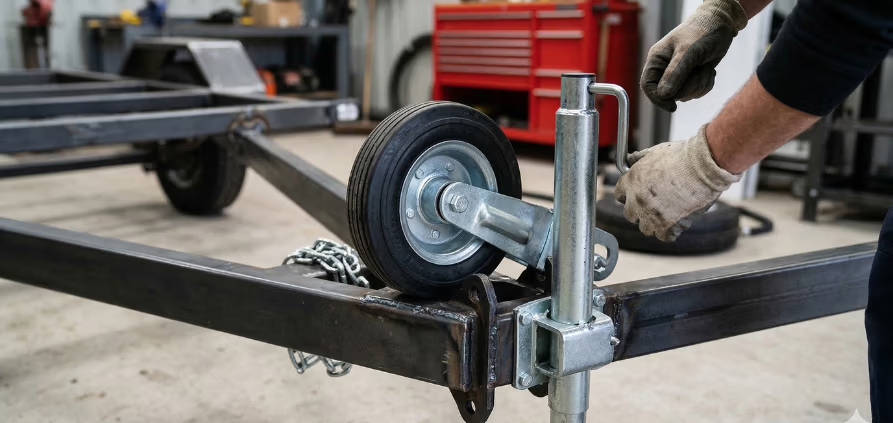
How to Choose the Right Jockey Wheel for Your Trailer Build?
Choosing the correct jockey wheel is one of the most important decisions you’ll make when building or upgrading a trailer. Proper jockey wheel selection directly affects safety, stability, manoeuvrability, and the long-term performance of your towing setup. Whether you’re working on a box trailer, camper, boat trailer, or car haulier, the right choice ensures smoother handling and reduces unnecessary strain on your trailer components.
Making an informed decision early saves time, prevents damage, and improves overall towing confidence. Key considerations include strength, terrain suitability, durability, and correct jockey wheel fitment based on your trailer’s design and usage. In this guide, we break down everything you need to know about choosing the ideal trailer jockey wheel, understanding jockey wheel load rating, and deciding when an off-road jockey wheel is the smarter option.
The Importance of Proper Jockey Wheel Selection
A jockey wheel does far more than hold your trailer upright when it’s not connected to a tow vehicle. It plays a vital role in weight management, ease of movement, and safe coupling and uncoupling. Choosing the wrong wheel can lead to instability, poor handling, accelerated wear, or even structural damage to the drawbar.
A well-chosen trailer jockey wheel offers
- Safe weight handling
- Improved mobility on various surfaces
- Smooth and stable trailer parking
- Easier coupling and uncoupling
- Better ground clearance
If your trailer is designed for frequent travel or load changes, the right wheel setup becomes even more essential.
Crucial Factors to Consider in Your Jockey Wheel Selection
Jockey Wheel Load Rating
This determines how much weight the wheel can safely support. Select a rating that matches your trailer’s unladen and loaded requirements.
How to choose the right load rating?
- Check the trailer’s ATM
- Estimate the nose weight typically resting on the jockey wheel.
- Add a margin of safety
- Select a wheel with a load capacity higher than your estimate.
This ensures the wheel won’t collapse under changing weights, uneven terrain or accidental drops during use.
Jockey Wheel Fitment and Mounting Style
The right jockey wheel fitment is important for stability and ease of use. Fitment is basically how the wheel attaches to the trailer drawbar.
Common mounting types include the following:
- Weld-on bracket
- Retractable swivel mount
- Clamp-on bracket
- Bolt-on swivel bracket
Clamp-on brackets are suitable for smaller trailers and allow fast adjustments. Bolt-on swivel brackets are ideal for medium- to heavy-duty trailers, enabling the wheel to swing up and lock away when not in use. Weld-on brackets offer exceptional strength, making them preferred for industrial or high-load applications.
Wheel Material and Tyre Style
A strong wheel ensures long service life. There are some common wheel types, like the following:
- Solid rubber tyres are great for sealed roads and workstation floors.
- Polyurethane wheels are durable, puncture-proof and suitable for heavy loads.
- Pneumatic tyres are best for uneven and soft surfaces.
When Do You Need an Off-road Jockey Wheel?
If your trailer is frequently used in regional, unsealed, or rugged conditions, such as forest trails, construction zones, or remote travel, you should opt for an off-road jockey wheel.
These wheels usually provide:
- Stronger brackets and reinforced shafts
- Enhanced swivelling and durability
- Larger wheel diameters for better terrain clearance
- Wider tyres to reduce sinking in soft ground
Additional Considerations Before Buying
Crank Handle Type: Top-wind and side-wind crank styles influence ease of operation, depending on the available space and comfort.
Swivel vs Fixed: Swivel wheels improve accessibility and storage, particularly for multi-purpose trailers.
Maintenance Requirements: Ensure the wheel has sealed bearings, corrosion protection and easy lubrication options.
Ground Clearance: Keep enough clearance between the wheel and ground when you travel, especially for off-road applications.
Budget: The more expensive units often offer a longer service life, resulting in cost savings over time.
Ways to Match Your Wheel to Your Trailer Type
Box Trailers: A mid-range trailer jockey wheel with a decent load rating and clamp-on bracket is enough.
Camper Trailers: Often used off-road, making an off-road jockey wheel a valuable investment for long life and safe positioning.
Boat Trailers: Galvanised or rustproof wheels are essential due to the risks of water exposure.
Car Trailers: Heavier loads need a higher jockey wheel load rating, supported by a bolt-on swivel bracket.
Choose Bawa Trailer Parts for Reliable Trailer Jockey Wheel Solution and More
At Bawa Trailer Parts, we supply high-quality components and practical expertise, enabling you to have trailers that are reliable and safe. We provide personalised advice on jockey wheel selection, have a diverse range of trailer jockey wheel models, and can guide you to the right jockey wheel load rating for your unique demands.
We also offer and fit quality off-road jockey wheel options designed to handle harsh conditions and heavier use. If you are in Acacia Ridge, Ipswich, Toowoomba, or the Sunshine Coast, you can rely on us for genuine parts supply, expert installation advice, and professional fitment, along with comprehensive after-sales support.
Contact Bawa Trailer Parts today to discuss your trailer requirements and ensure your setup is built for long-term safety and performance.